Why Fly Ash
Two ways to make a brick
The honest comparison between a pressed fly ash brick and a kiln-fired red clay brick, including the places where red clay still wins.
Side by side
| Fly ash cement brick | Kiln-fired red clay brick | |
|---|---|---|
| Made by | Hydraulic pressing, cured in air | Moulding, then fired in a kiln |
| Raw material | Power-station fly ash, cement, stone dust | Agricultural topsoil |
| Size consistency | High, same mould and same pressure every time | Varies, bricks warp in the kiln |
| Mortar and plaster used | Less, flat faces allow thin joints | More, uneven faces need levelling |
| Water absorption | Lower | Higher, so more risk of damp |
| Mortar grip | Smoother face. Use a 1:4 mix and wet before laying | Rough face grips readily |
| Exposed brickwork look | Grey, so usually plastered | The red face people want on show |
| Fuel burnt to make it | None | Coal or firewood, for days |
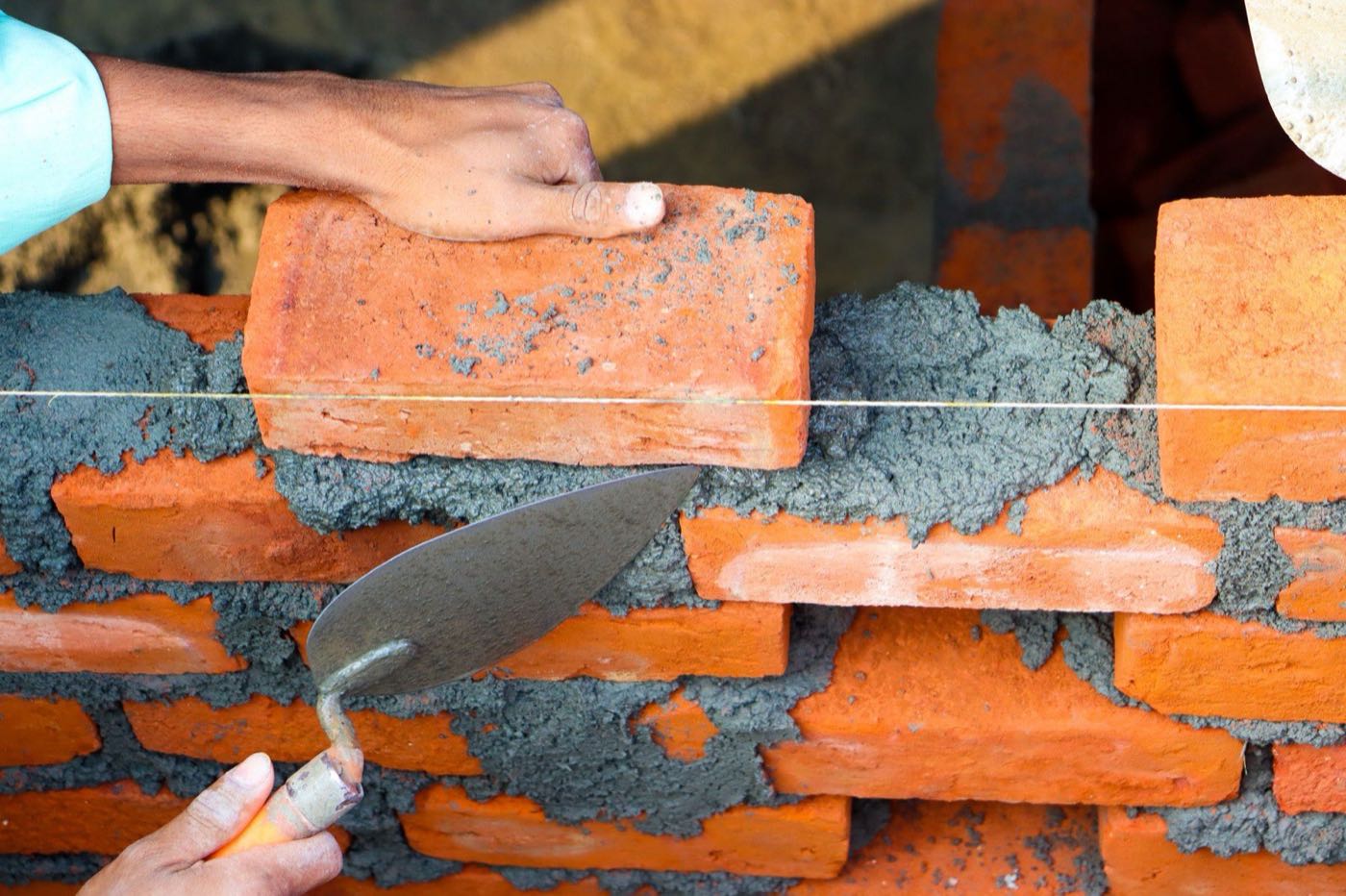
Red clay brickwork. Illustrative photograph, not our product.
Where red clay still wins
We are not going to pretend otherwise. A fly ash brick has a smoother face, so mortar grips it less readily than it grips a rough clay brick. Masons should use a 1:4 cement and sand mix rather than a leaner one, and wet the brick before laying. If your mason has spent thirty years on red clay, give him the first hundred bricks to get the feel. And for exposed brickwork where you want that red face on show, clay is the one you want.
IS 12894:2002
The standard these are measured against
Fly ash bricks in India are specified under IS 12894:2002. It sets the compressive strength classes, caps water absorption at 20 percent by weight for the common classes, and limits efflorescence. It is worth knowing the numbers before you buy from anyone, including us.
How to check a brick yourself
Four things you can do standing in any brick yard, with no equipment. They work on our bricks and on everybody else's.
- 01
The drop test
Drop a brick flat from about waist height onto hard ground. A sound brick survives or chips at a corner. A weak one breaks into pieces.
- 02
The scratch test
Run a fingernail hard across the face. It should leave nothing. If it leaves a groove, the brick is under-cured or short on cement.
- 03
The two-brick ring
Strike two bricks together. A well-cured brick gives a clear ring. A dull thud means moisture still inside.
- 04
The soak test
Weigh a brick dry, soak it in water for 24 hours, then weigh it again. Under IS 12894 the gain should not exceed 20 percent of the dry weight for the common classes.
Questions people ask
The things we get asked on the phone most days.
Are fly ash bricks as strong as red clay bricks?
Yes. Fly ash bricks in India are specified under IS 12894:2002, which sets compressive strength classes such as Class 7.5 and Class 10 in newtons per square millimetre. Red clay brick strength varies widely with the clay and the firing, from about 5 to 40.
What is the disadvantage of fly ash bricks?
The face is smoother than a rough clay brick, so mortar grips it less readily. Use a 1:4 cement to sand mortar rather than a leaner mix, and wet the bricks before laying. They are also grey, so they are usually plastered rather than left as exposed brickwork.